How to Elope in Estes Park, Colorado: A Photographer’s Practical Guide to Rocky Mountain National Park Weddings
If you’ve been dreaming of alpine lakes, elk wandering through meadows, and the kind of mountain air that makes everything feel more real — Estes Park might be exactly where you’re supposed to say your vows.
Lets get started
I’ve photographed weddings all over the world, and there’s something genuinely special about this corner of Colorado. It’s not just the scenery (though the scenery is unreal). It’s that Estes Park is a place that rewards couples who do their homework. The ones who plan ahead, who understand how the park works, and who aren’t afraid to embrace the adventure of it all — those are the couples who walk away with a day that feels completely theirs.
This guide is everything I wish couples knew before they started planning their elopement. Permits, timing, ceremony sites, logistics — let’s get into it.
If you’re planning something bigger and need more of a venue space, check out this blog on Estes Park Wedding Venues.
Why Estes Park for Your Elopement?
Estes Park sits at the entrance to Rocky Mountain National Park, about two hours from Denver. It’s a mountain town with real character — cozy restaurants, local shops, the legendary Stanley Hotel (yes, that Stanley Hotel) — but what makes it special for couples is the access it gives you to one of the most stunning natural settings in the country.
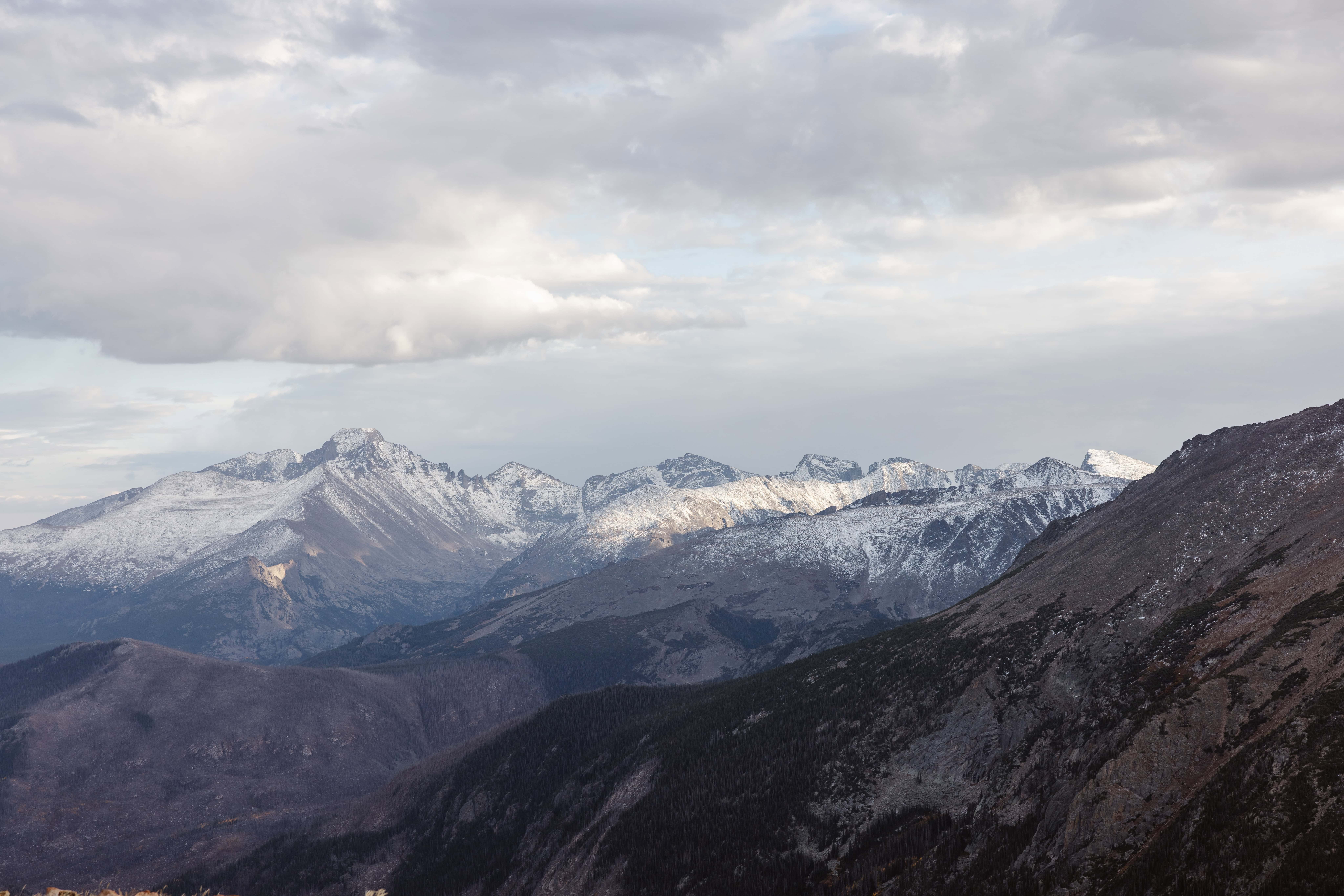
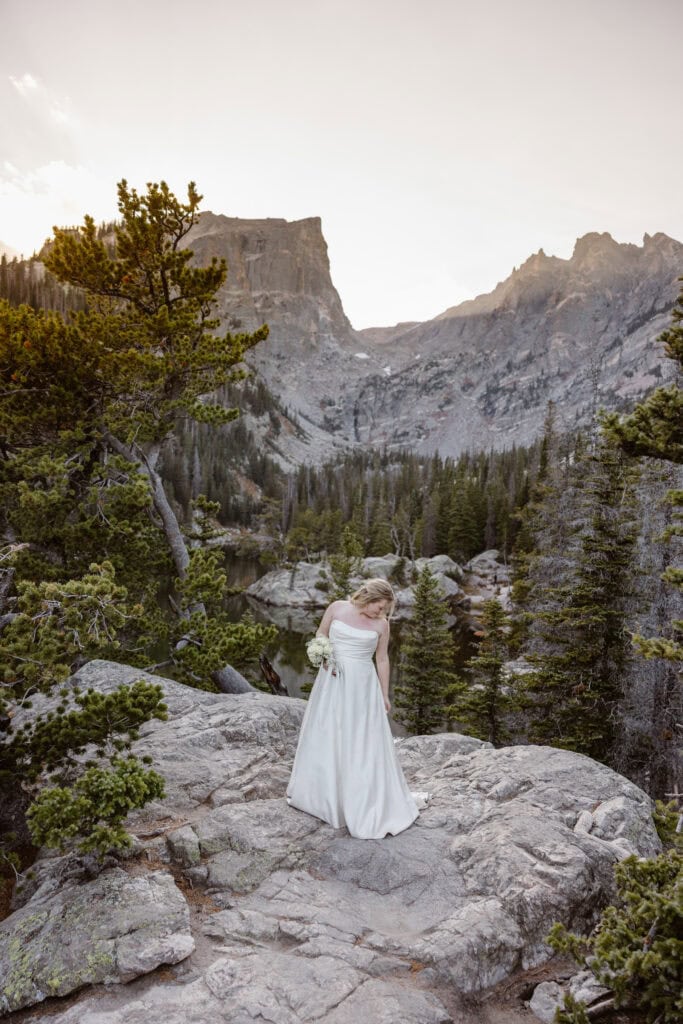
The park itself covers 415 square miles of peaks, alpine lakes, meadows, and wildlife. For elopements, it offers something increasingly rare: the feeling that you’re somewhere that actually matters, not just somewhere that photographs well.
The Most Important Thing: Permits Sell Out Fast
I’m leading with this because it’s the detail that trips up the most couples.
Rocky Mountain National Park requires a Special Use Permit for wedding ceremonies, and they are issued on a strict first-come, first-served basis. Here’s what you need to know:
Peak season (May–October): 60 permits are issued per month
Off-season (November–April): 40 permits per month
Permits open one year in advance, on a rolling monthly basis (June 1st opens all June dates the following year, etc.)
The permit costs $300, plus a $30 park entrance fee per vehicle
Park entry requires a timed reservation during peak months — your wedding permit covers your entry for the day, starting two hours before your ceremony
For 2026, June and September are already fully booked. If you’re targeting a summer date, apply the moment the window opens. If you’re flexible, weekdays almost always have more availability than weekends.
To apply, submit your Special Use Application directly to the park at romo_fees_permits@nps.gov. Include your preferred date, ceremony location, and guest count.
If permits are sold out: You can still photograph inside the park — portraits don’t require a permit. Hold your ceremony just outside the park boundaries, then spend the rest of the day adventuring through RMNP for photos. It’s actually a beautiful way to structure the day.
Ceremony Sites Inside the Park
The park has designated ceremony sites, and you’re required to use one — you can’t just pick a random trailhead and call it your altar. That said, the options are genuinely stunning. Here are a few of the best:
Sprague Lake — Accessible, peaceful, and reflects the peaks on calm mornings. Up to 10 guests. Great for couples who want iconic views without a big hike.
Bear Lake — One of the most recognizable spots in RMNP. Very busy, but the views are world-class. Up to 10 guests.
Hidden Valley — A more private, forested setting. Used to be a ski area, which gives it a quietly dramatic feel. Up to 30 guests, high privacy.
Lily Lake — A gem just outside the main park entrance. Dock ceremonies here are breathtaking. Up to 20 guests.
Upper Beaver Meadows — A gorgeous forested meadow with mountain backdrop. Up to 30 guests. Note: not accessible by vehicle mid-October through mid-May.
Moraine Park — One of the only sites in the park that allows arches and tables, making it a good fit if you want a slightly more traditional setup. Up to 30 guests.
A few things the park doesn’t allow (regardless of location): decorations, floral arches, chairs for general seating, loud music. What it does allow: the actual mountains. Honestly, you won’t miss the arch.
Getting Your Marriage License
You can pick up your Colorado marriage license in any county and use it anywhere in the state. If you’re flying in, grabbing it in Denver before you drive up is an easy option. If you’d rather do it locally, the Larimer County offices are right in Estes Park at 1601 Brodie Avenue, open Monday–Friday, 8am–4:30pm. It costs $30.
When to Go
Summer (June–August) is peak season. The wildflowers are out, Trail Ridge Road is fully open, and the light in the late afternoon is the stuff of dreams. The tradeoff is crowds — and afternoon thunderstorms that are predictable enough to plan around, as long as you structure your day right.
September is arguably the best month. The aspen trees start turning, the elk rut begins (which means you might have an elk bugling in the background of your ceremony, which I personally think is incredible), and the crowds thin out slightly. Permits go fast for a reason.
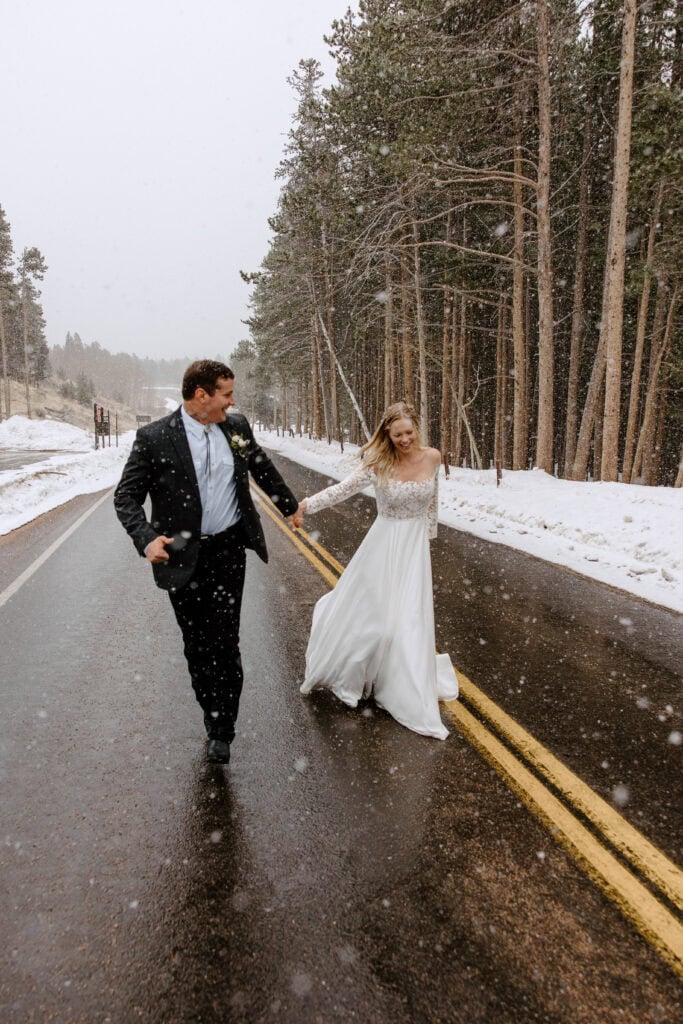
Winter and early spring are underrated. Snow-covered peaks, dramatically fewer people, and a totally different kind of magic. Accessibility is limited in some areas, but for the right couple, a January elopement in RMNP is unforgettable.
My practical timing advice: aim for sunrise. The park is quieter, the light is better, and there’s something about starting your marriage as the sun comes up over the Rockies that just hits differently.
Beyond the Permit: What Else to Plan
Vendors: Your photographer and officiant can operate under your permit. Additional vendors like a live musician or on-site florist need separate park approval — ask the permit office before you assume they can come in.
Guests: Maximum guest count across all ceremony sites is 30, which includes your couple, photographer, and officiant. Plan accordingly.
Dogs: Unfortunately, dogs are only allowed where vehicles can go in RMNP — mostly roads and parking lots, not at ceremony sites.
Reception: The park doesn’t allow traditional receptions. For post-ceremony celebrating, Estes Park has solid options — The Nest Above hosts intimate dinner packages for micro-weddings, and the Bird and Jim is great for groups under 20. Or honestly? A champagne toast at a scenic overlook with just the two of you is hard to beat.
What I Bring as Your Photographer
I’m not just there to click a shutter. I help you understand the permit process, build a timeline that works with the light and the logistics, scout the right location for your vision, and make sure you’re not stressed about any of it on the actual day.
My background is in documentary photography — I spent time working with Photographers Without Borders before I started shooting weddings. What that means for you is that I’m not interested in posed, stiff, “stand here and smile” photography. I’m interested in capturing what’s actually happening: the real moment, the real light, the real you.
If Estes Park is calling to you, I’d love to talk about it. Reach out and let’s make a plan.
Rose is a destination wedding and elopement photographer based in Colorado. She photographs weddings across the US and internationally, with a focus on couples who value the experience over the excess.